Pope 1SAINT
St. Peter
c. 30–68 — Galilean (Jewish)
The first pope. Fisherman chosen by Christ as the 'Rock' of the Church (Matthew 16:18). Led the early Church in Jerusalem and Rome. Crucified upside down under Emperor Nero on Vatican Hill.
Successors of Peter
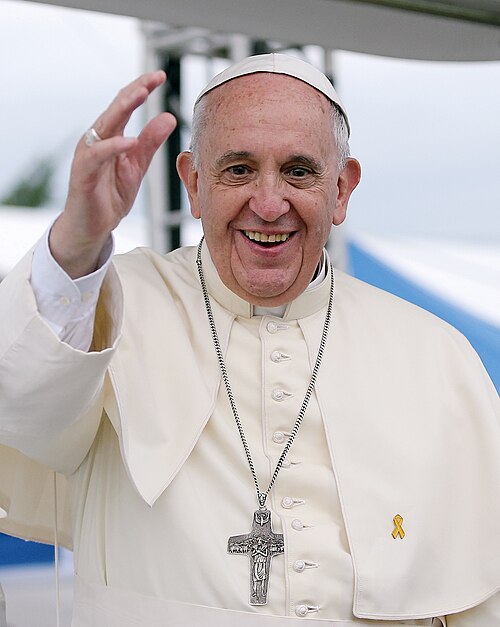
From St. Peter, crucified upside down on Vatican Hill around 68 AD, to Pope Francis — a complete record of 265 men who have held the office of Bishop of Rome across nearly 2,000 years of history.
267
Total Popes
~2,000
Years of History
83
Canonised Saints
c. 30 – 498 AD
The foundational centuries — from Peter's martyrdom through the collapse of the Western Roman Empire.
c. 30–68 — Galilean (Jewish)
The first pope. Fisherman chosen by Christ as the 'Rock' of the Church (Matthew 16:18). Led the early Church in Jerusalem and Rome. Crucified upside down under Emperor Nero on Vatican Hill.
c. 67–76 — Italian
Peter's immediate successor. Mentioned by St. Paul (2 Timothy 4:21). Martyred under Emperor Vespasian.
c. 76–88 — Greek
Third pope. Organised the Roman clergy into presbyteries. Martyred under Emperor Domitian.
c. 88–99 — Roman
Author of the earliest surviving Christian letter outside the New Testament — the 'Letter to the Corinthians.' Established the authority of bishops as successors of the Apostles. Martyred by drowning with an anchor tied to him, which became his symbol.
c. 99–107 — Greek
Fifth pope. Divided Rome into parishes (tituli). Martyred under Emperor Trajan.
c. 107–115 — Roman
Introduced the mixing of water with wine at Mass and the use of holy water. Martyred under Hadrian.
c. 115–125 — Roman
Seventh pope. Established several liturgical norms still in use, including the Sanctus. Possibly martyred.
c. 125–136 — Greek
The only 2nd-century pope whose martyrdom is historically confirmed, attested by St. Irenaeus. Introduced the Gloria in Excelsis and the practice of three Masses on Christmas Day.
c. 136–140 — Greek
Ninth pope. Organised the hierarchy of the Roman church. Confronted early Gnostic heresies, including Valentinus.
c. 140–155 — Italian
Tenth pope. Brother of Hermas, author of the early Christian text 'The Shepherd.' Condemned the Marcionite heresy. Possibly martyred.
c. 155–166 — Syrian
Eleventh pope. Hosted St. Polycarp of Smyrna in Rome to discuss the date of Easter — the first recorded controversy over this question. Martyred.
c. 166–175 — Italian
Twelfth pope. Known for charity to poor Christians and prisoners. Confirmed Easter Sunday as an annual feast.
c. 175–189 — Greek
Thirteenth pope. Received missions from England and Gaul. Combated Montanism. Ruled for fourteen years.
189–199 — African (Berber)
First African pope and first to conduct Church business in Latin rather than Greek. Threatened to excommunicate Eastern churches over the Easter date controversy — the first exercise of papal authority over distant churches.
199–217 — Roman
Fifteenth pope. Navigated the Monarchianist controversies. St. Hippolytus was his fierce critic. Possibly martyred.
217–222 — Roman
A former slave who rose to become pope. Established the famous Catacomb of Callixtus on the Appian Way, still one of Rome's most visited sites. Martyred in a popular uprising.
222–230 — Roman
Seventeenth pope. Possibly martyred under Alexander Severus. Many Christians converted during his reign due to relative peace.
230–235 — Roman
First pope to abdicate — forced by Emperor Maximinus Thrax, who exiled him to the Sardinian mines. Died from harsh conditions. His abdication enabled the Church to elect a successor.
Nov 235–Jan 236 — Greek
Nineteenth pope with one of the shortest pontificates — approximately 43 days. Died a natural death. Collected accounts of Christian martyrs.
236–250 — Roman
Legend says a dove landed on his head during the election, revealing him as God's choice — a layman who became pope instantly. Organised the Roman church into seven regions. Martyred under Emperor Decius. St. Cyprian called him 'incomparable.'
251–253 — Roman
Elected after a 14-month vacancy. Opposed Novatianism — the rigorist heresy that denied forgiveness to those who lapsed during persecution. Exiled by Emperor Gallus and died from harsh treatment.
253–254 — Roman
Twenty-second pope. Brief pontificate. Exiled briefly by Emperor Gallus, then allowed to return. Died a natural death though venerated as a martyr.
254–257 — Roman
Embroiled in fierce controversy with St. Cyprian over whether baptisms by heretics were valid. Stephen insisted they were; Cyprian disagreed. The conflict illustrates early tensions over papal authority. Died peacefully during the Valerian persecution.
257–258 — Greek
Martyred with four deacons during the Mass by Emperor Valerian's soldiers on August 6, 258. His deacon, St. Lawrence, was martyred three days later. St. Cyprian was martyred the same year. One of the most dramatic single moments of 3rd-century persecution.
260–268 — Unknown
Reorganised the Roman church after the devastation of the Valerian persecution. Condemned Sabellian heresy and resolved tensions in the North African church.
269–274 — Roman
Twenty-sixth pope. Condemned the Monarchianist heresy of Paul of Samosata. Established the practice of celebrating Mass over the tombs of martyrs.
275–283 — Italian
Twenty-seventh pope. Period of relative peace. Reportedly buried 342 martyrs with his own hands, though this may be legend. Natural death.
283–296 — Dalmatian
Twenty-eighth pope. Said to be related to Emperor Diocletian. Established the sequence of clerical orders before episcopate.
296–304 — Roman
Reigned during the Great Persecution of Diocletian. Accused of handing over scripture and offering incense to pagan gods — a serious charge. He may have later repented and was martyred. His case remains historically complex.
308–309 — Roman
Thirtieth pope after a lengthy vacancy. Faced the crisis of how to reconcile Christians who had lapsed under Diocletian. His strict policies caused a popular revolt. Condemned by a synod and died shortly after.
309–310 — Greek
Thirty-first pope. Exiled to Sicily by Emperor Maxentius after internal conflict over readmission of the lapsed. Died in exile.
311–314 — African
Pope during the epochal Edict of Milan (313), which granted Christians freedom of worship. Constantine donated the Lateran Palace to the Church. The age of persecution ended under Miltiades.
314–335 — Roman
Pope during the Council of Nicaea (325), the first ecumenical council, which defined Christ's divinity against Arianism. Longest-reigning early pope — 21 years. Received the Lateran Basilica from Constantine, which became the cathedral of Rome.
Jan–Oct 336 — Roman
Thirty-fourth pope. Very brief pontificate of approximately 8 months. Built two basilicas in Rome. Natural death.
337–352 — Roman
Championed St. Athanasius against Arian emperors and bishops. Convened the Council of Sardica (343), which affirmed the right of bishops to appeal to Rome. Established December 25 as the official date of Christmas.
352–366 — Roman
First pope not canonised as a saint. Under pressure from the Arian Emperor Constantius II, he signed an Arian formula and exiled St. Athanasius — though he later repented. A deeply tragic figure: a man broken by imperial power.
366–384 — Spanish
Commissioned St. Jerome to produce the Vulgate — the definitive Latin Bible, still the basis of Catholic translations. Elevated the prestige of the Roman see, applying Matthew 16:18 to the papacy. Established Rome's primacy in doctrinal appeals.
384–399 — Roman
Issued the first formal papal decretal — a letter of binding doctrinal instruction to other churches. Established clerical celibacy as a binding norm in the West. Set the template for future papal legislative authority.
399–401 — Roman
Thirty-ninth pope. Condemned the writings of Origen as heretical. Brief but consequential pontificate. St. Jerome called him 'a man of great holiness.'
401–417 — Italian (Albano)
One of the most important early popes. Explicitly claimed universal jurisdiction over all churches and the right to decide all major doctrinal controversies. Sheltered St. John Chrysostom. His pontificate saw the sack of Rome by Alaric (410) — a civilization-shaking event.
417–418 — Greek
Forty-first pope. Brief pontificate marked by controversy over Pelagianism (the heresy that humans can achieve salvation without grace). Reversed himself twice on the question, causing confusion.
418–422 — Roman
Elected amid schism — two rival popes claimed the see simultaneously. Eulalius was supported by the Emperor, but Boniface prevailed. Vigorously defended Rome's primacy over the African and Eastern churches.
422–432 — Italian
Sent St. Germanus to Britain to combat Pelagianism and — according to tradition — commissioned St. Patrick to evangelize Ireland (432). Presided over the Council of Ephesus (431), which defined Mary as Theotokos (Mother of God). A decisive pontificate.
432–440 — Roman
Built or restored the Basilica of Santa Maria Maggiore in Rome — still standing today, decorated with stunning 5th-century mosaics — to celebrate the Council of Ephesus's definition of Mary as Mother of God.
440–461 — Italian (Tuscany)
One of only two popes in history called 'the Great.' Famously rode out to meet Attila the Hun on the River Po in 452 and persuaded him to turn back from Rome — an act commemorated in Raphael's Vatican fresco. Wrote the 'Tome of Leo,' the definitive statement of Christ's two natures, read aloud at the Council of Chalcedon (451). The most theologically and politically consequential pope of the first millennium.
461–468 — Sardinian
Forty-sixth pope. Built several chapels in Rome. Defended Chalcedonian orthodoxy against heretical emperors in the East. Left an important collection of papal documents.
468–483 — Italian
Pope during the fall of the Western Roman Empire (476). As the last Roman emperor was deposed, the papacy became the sole institution of continuity in the West. Simplicius navigated the Acacian schism — the first major split between Rome and Constantinople.
483–492 — Roman
An ancestor of Pope Gregory the Great. Excommunicated Patriarch Acacius of Constantinople — the first formal break between East and West, known as the Acacian Schism. A great-great-grandfather of Gregory I.
492–496 — African
Second African pope. Articulated the foundational doctrine of 'two powers' — the spiritual authority of the Church and the temporal authority of kings — laying the groundwork for medieval political theology. Prolific writer; produced 49 papal letters. Defended the full humanity and divinity of Christ against the Monophysites.
496–498 — Roman
Attempted reconciliation with Constantinople after the Acacian Schism. His conciliatory approach was viewed as betrayal by many Roman clergy. Later condemned by Dante in the Inferno (Canto XI) as a heretic — though modern historians dispute this characterisation.
499 – 827 AD
The papacy navigates barbarian kingdoms, Byzantine emperors, Islam, and the rise of the Franks.
498–514 — Sardinian
His election was immediately contested by Antipope Laurentius — the Laurentian Schism lasted until 506. He built or restored many Roman churches and was the first pope to wear the pallium. Defended by Theodoric the Great.
514–523 — Italian
Ended the Acacian Schism (519) — a 35-year split between Rome and Constantinople. The 'Formula of Hormisdas,' signed by the Eastern Patriarch and over 2,500 bishops, remains one of the most significant affirmations of Roman primacy in history. Father of Pope Silverius.
523–526 — Italian (Tuscany)
First pope to travel to Constantinople. Sent by Theodoric the Gothic king to negotiate with Emperor Justin. Crowned Justin in the Hagia Sophia. On his return, Theodoric imprisoned him; he died in prison — the first pope to die in captivity.
526–530 — Italian (Samnium)
Appointed directly by Theodoric the Great, breaking from election norms. Built the Church of SS. Cosmas and Damian in Rome — one of the finest early Christian mosaics survives there. Designated his successor before death, which caused a disputed election.
530–532 — Roman (Gothic descent)
First Germanic pope. His election was contested by Dioscorus. After Dioscorus died, Boniface attempted to designate his own successor — the Roman clergy forced him to publicly burn the document.
533–535 — Roman
First pope to change his name upon election (his birth name was Mercurius — the name of a pagan god). This began the tradition of papal name changes, now universal.
535–536 — Roman
Travelled to Constantinople to negotiate with Emperor Justinian. Deposed the Monophysite Patriarch Anthimus. Founded a library in Rome, anticipating the monastic preservation of learning. Died in Constantinople.
536–537 — Italian (Campania)
Son of Pope Hormisdas. The Empress Theodora had him deposed and exiled to the island of Ponza, where he died from mistreatment — possibly murdered. He is venerated as a martyr. His successor Vigilius had conspired with Theodora for the papal throne.
537–555 — Roman
A deeply compromised pontificate. Vigilius had promised Empress Theodora to support Monophysitism in exchange for the papal throne. He was later arrested by Emperor Justinian, dragged from a church in Constantinople while clinging to the altar, and held captive for years over the Three Chapters controversy. He capitulated to the emperor, dividing the Western church.
556–561 — Roman
Appointed directly by Emperor Justinian without a proper election. His acceptance of the Fifth Ecumenical Council caused a schism with much of the Western church. Worked hard to restore churches in Rome devastated by the Gothic Wars.
561–574 — Roman
Reigned during the devastating Lombard invasion of Italy. Sought imperial military support from Constantinople, which proved inadequate. Rome was reduced to desperate poverty. John buried the papal dead in the catacombs personally.
575–579 — Roman
Reigned through severe famine and the plague of Justinian, which decimated Rome's population. The Lombard siege of Rome was lifted briefly during his pontificate. He died during the siege.
579–590 — Roman (Gothic descent)
First pope consecrated without imperial confirmation — a step toward papal independence. Sent the young deacon Gregory (the future Gregory the Great) to Constantinople as his representative. Died of plague during a catastrophic flooding of the Tiber.
590–604 — Roman
One of only two popes called 'the Great' — the other being Leo I. A Roman nobleman who gave away his fortune, founded monasteries, and became a monk before being elected pope against his will. Sent St. Augustine of Canterbury to evangelize England (596). Reformed the liturgy and chant (Gregorian chant bears his name). Wrote the Dialogues, the Moralia, and the Pastoral Rule — masterworks of spiritual literature that shaped medieval Christianity. Negotiated with the Lombards, organised food distribution for starving Romans, and managed an empire effectively after imperial authority had collapsed. Among the most consequential humans in Western history.
604–606 — Italian (Tuscany)
Successor to Gregory the Great. Reversed several of Gregory's charitable practices and reportedly sold grain at market prices during famine. Roman tradition claimed Gregory's ghost appeared and rebuked him. He died before the Romans could physically assault him.
Feb–Nov 607 — Roman (Greek descent)
Very brief pontificate of approximately 8 months. Secured from Emperor Phocas the declaration that Rome, not Constantinople, was 'the head of all the churches' — a politically significant though not universally accepted statement.
608–615 — Italian (Valeria)
Converted the Pantheon — the great pagan temple in Rome — into a Christian church dedicated to Mary and All Martyrs. It remains in use to this day as the Church of Santa Maria ad Martyres, the best-preserved ancient building in the world.
615–618 — Roman
First pope in a century born in Rome of a Roman family. Known for immense charity to the clergy and poor. Died during the plague. Also known as Adeodatus I.
619–625 — Italian (Naples)
Strongly supported the evangelization of England begun by Gregory the Great. Decreed that churches were places of asylum that civil authorities could not violate — an important medieval legal protection.
625–638 — Italian (Campania)
A deeply controversial figure. His letters to the Patriarch of Constantinople appeared to endorse the Monothelite heresy (that Christ had only one will). After his death, the Third Council of Constantinople (681) formally condemned him as a heretic — the only pope condemned by an ecumenical council. The episode became a major argument in debates about papal infallibility at Vatican I.
May–Aug 640 — Roman
Pontificate of only two months. His election was delayed for 18 months while the imperial Exarch plundered the Lateran treasury. Died before he could accomplish much.
640–642 — Dalmatian
A Dalmatian, he immediately defended his homeland by ransoming Christian captives from the Avars. Condemned Monothelitism. Defended Honorius I by claiming his predecessor's letters had been misinterpreted.
642–649 — Greek (Jerusalem)
A Greek from Jerusalem, continuing the Eastern influence on the papacy. Excommunicated the Monothelite Patriarch of Constantinople. Strong defender of Chalcedonian orthodoxy.
649–655 — Italian (Umbria)
Convened the Lateran Council (649), which condemned Monothelitism in defiance of Emperor Constans II. The Emperor had him arrested, brought in chains to Constantinople, publicly humiliated, exiled to Crimea, and left to starve. He died in 655 from mistreatment — the last pope venerated as a martyr.
654–657 — Roman
Elected while Martin I was still alive in exile. A gentle, universally loved figure. Refused to accept a Monothelite compromise from Constantinople. Died peacefully.
657–672 — Italian (Campania)
Restored relations with Constantinople and with the English church. Sent St. Theodore of Tarsus to be Archbishop of Canterbury — one of the most consequential appointments in English Church history. Theodore organised the English church into a proper structure.
672–676 — Roman
A Benedictine monk — the first pope definitely known to come from monastic life, a pattern that would dominate the medieval papacy. Charitable and learned. Natural death.
676–678 — Roman
Brief pontificate. Restored relations with the Ravenna church, which had been schismatic. Began repairs on many Roman churches damaged by the long wars.
678–681 — Greek (Sicily)
Prepared the Third Council of Constantinople (681), which definitively condemned Monothelitism and the memory of Honorius I. His synodal letter was read at the Council as doctrinally authoritative — a strong assertion of papal teaching authority. Reportedly 100 years old at his election.
682–683 — Sicilian (Greek)
Confirmed the decrees of the Third Council of Constantinople. Introduced antiphonal chanting into the Roman liturgy. Translated Greek documents into Latin. Brief pontificate of approximately 11 months.
684–685 — Roman
Secured from Emperor Constantine IV the right of the Roman clergy to elect the pope without requiring imperial approval — a significant step toward papal independence. Known for personal holiness and charity.
685–686 — Syrian
First Syrian pope. Elected by popular acclamation. Brief pontificate of approximately 11 months. The Syrian and Greek influence on the 7th century papacy was profound.
686–687 — Thracian (Greek)
Elected as a compromise candidate — old, infirm, and expected to reign briefly. He did. Reigned approximately 11 months. The factional conflicts following his death led to yet another disputed election.
687–701 — Syrian (Antioch)
Refused to sign the Quinisext Council's canons (which contradicted Roman practice) despite Emperor Justinian II sending soldiers to arrest him. The Roman populace defended him and the soldiers fled. He added the Agnus Dei to the Mass and introduced four Marian feasts into the Roman calendar. Baptised the pagan King of the Saxons, Cædwalla.
701–705 — Greek
Defended Italy from the Byzantine Exarch's excessive taxation by negotiating a settlement. Ransomed Lombard captives. Brief pontificate of approximately 3 years.
705–707 — Greek
Son of a Byzantine official. An accomplished builder; commissioned important mosaics in Rome (some surviving in Santa Maria Antiqua). When Emperor Justinian II sent him the Quinisext Council canons for a second review, he returned them unsigned without comment — a diplomatic non-answer.
Jan–Feb 708 — Syrian
Pontificate of only 20 days — one of the shortest in history. He was so ill with gout that he could not feed himself. Managed to order the repair of Rome's walls before his death.
708–715 — Syrian
The last pope to visit Constantinople for nearly 1,300 years — until John Paul II in 1979. Emperor Justinian II prostrated himself before the pope and kissed his feet — an extraordinary gesture from a Byzantine emperor. Secured important ecclesiastical rights for the Roman church.
715–731 — Roman
A decisive pope who opposed the Iconoclast heresy of Emperor Leo III, who ordered the destruction of religious images. Gregory refused, rallied the Western church against the Emperor, and effectively ended Byzantine control over papal elections by relying on Lombard protection. Supported St. Boniface's mission to the Germans.
731–741 — Syrian
Last non-European pope until John Paul II (1978). Convened a synod that formally condemned Iconoclasm. When Emperor Leo III retaliated by seizing papal properties in Sicily and southern Italy, Gregory turned to the Frankish leader Charles Martel for protection — beginning the fateful alliance between the papacy and the Franks.
741–752 — Greek (Calabria)
Last Greek pope. Skilled diplomat — negotiated multiple truces with the Lombards, sparing Rome from repeated sieges. Approved the deposition of the last Merovingian king and the anointing of Pepin the Short as King of the Franks — a momentous decision that created the Carolingian dynasty and reshaped European history.
752 (3 days) — Roman
Elected pope but died of a stroke three days later before being consecrated bishop. Whether he counts as a true pope has been debated for centuries — he appears in some historical lists and not others. His brief existence created the numbering confusion between Stephen II and Stephen III.
752–757 — Roman
The first pope to cross the Alps. Travelled to the Frankish court of Pepin the Short, anointed Pepin and his sons, and secured the 'Donation of Pepin' — a grant of central Italian territories that became the Papal States, which lasted until 1870. This journey fundamentally changed the papacy from a Roman institution into a Western one.
757–768 — Roman
Brother of Stephen III. The first pope to be elected without any imperial involvement. Maintained the Frankish alliance. Faced continued Lombard aggression. Known for personal piety and charity.
768–772 — Sicilian
The Lateran Council of 769, convened under Stephen, ruled that only cardinals could be elected pope — the first formal restriction on papal elections. Excluded the laity from the electoral process.
772–795 — Roman
Twenty-three year pontificate — one of the longest in history at that time. Built a close alliance with Charlemagne, who defeated the Lombards and confirmed the Papal States. Together they shaped medieval Christendom. Charlemagne wept openly when he heard of Adrian's death.
795–816 — Roman
Crowned Charlemagne Holy Roman Emperor on Christmas Day, 800 — in the basilica of St. Peter's. This coronation created the political framework of Christian Europe for the next millennium. Leo had been violently attacked and mutilated by enemies in Rome; Charlemagne restored him to the papal throne.
816–817 — Roman
Crowned Emperor Louis the Pious at Rheims — the first papal coronation of a Frankish emperor on Frankish soil. Reigned only approximately one year.
817–824 — Roman
Built several important churches in Rome and decorated them with mosaics, many of which survive. Sheltered monks fleeing Byzantine Iconoclasm. His reign was troubled by violent factions in Rome.
824–827 — Roman
The Constitutio Romana of 824, agreed with Emperor Louis the Pious, placed the papacy under increased Frankish oversight — requiring the pope-elect to take an oath of loyalty before consecration. A step backward for papal independence.
827 – 1048 AD
The Pornocracy, the Cadaver Synod, and the first stirrings of Gregorian Reform.
Aug–Sep 827 — Roman
Pontificate of approximately 40 days — died of natural causes. Almost nothing is recorded of his actions during this time.
827–844 — Roman
Attempted to mediate the civil war among Charlemagne's grandsons. Introduced the feast of All Saints (November 1) to the universal Church.
844–847 — Roman
The Muslim Saracens sacked the Basilicas of St. Peter and St. Paul outside the Walls during his pontificate (846) — a catastrophic humiliation. Accused of simony in his election.
847–855 — Roman
Built the Leonine Wall around Vatican Hill to protect it from future Muslim raids — it still stands today. Led a naval coalition that defeated the Saracen fleet at the Battle of Ostia (849), commemorated in Raphael's Vatican fresco. A model of the warrior-pope.
855–858 — Roman
His election was briefly contested by an imperial antipope. The legendary story of 'Pope Joan' — a woman who supposedly reigned as pope between Leo IV and Benedict III — is considered entirely fictional by modern historians.
858–867 — Roman
One of only three popes called 'the Great.' Towering figure who asserted the supremacy of papal authority over emperors and patriarchs alike. Forced King Lothair II to take back his lawful wife. Opposed the appointment of Photius as Patriarch of Constantinople — leading to the Photian Schism. His statements on papal authority were the most forceful since Leo the Great.
867–872 — Roman
Elected aged 80 — the oldest man to become pope at that time. His family was murdered during his pontificate. Welcomed Sts. Cyril and Methodius, the Apostles to the Slavs, to Rome and approved the use of Slavonic as a liturgical language — a momentous decision for Eastern European Christianity.
872–882 — Roman
First pope to be assassinated — poisoned and then clubbed to death by members of his own entourage. His pontificate was turbulent: he crowned two emperors, negotiated with the Saracens, and faced constant political violence.
882–884 — Italian (Tuscany)
First pope to have previously served as a bishop before election — technically violating canon law that prohibited translation between sees, though this rule was soon abandoned.
884–885 — Roman
Brief pontificate of approximately 14 months. Died suddenly on his way to a Diet in Worms — his death raised suspicions of poisoning. Canonised in 1891 by Leo XIII.
885–891 — Italian
Navigated the increasing chaos of the fragmented Carolingian Empire. Dealt with invasions of Saracens from the south and Normans from the north.
891–896 — Roman
Subject of the infamous 'Cadaver Synod' after his death: his successor Stephen VII had his corpse exhumed, dressed in papal vestments, propped on a throne, and put on trial for violating canon law. The decomposing body was 'found guilty,' its fingers cut off, and thrown in the Tiber. Stephen VII was subsequently strangled in prison.
Apr 896 (16 days) — Roman
Pontificate of only 16 days — one of the shortest in history. Previously twice degraded from holy orders for immorality. Died of gout.
896–897 — Roman
Conducted the macabre 'Cadaver Synod' against Pope Formosus. His extreme actions provoked a popular uprising; he was stripped of his vestments, imprisoned, and strangled.
Aug–Nov 897 — Italian
Brief pontificate of approximately 4 months. Reversed the condemnation of Formosus from the Cadaver Synod. Resigned — one of very few popes to do so voluntarily.
Dec 897 (20 days) — Roman (Greek descent)
Pontificate of only 20 days. Rehabilitated Formosus and had his body given a proper burial. Convened a synod that nullified the Cadaver Synod's decrees.
898–900 — Italian (Tivoli)
Convened synods that fully rehabilitated Formosus and condemned the Cadaver Synod. Established canonical procedures for papal elections requiring participation of the Roman clergy, laity, and imperial representatives.
900–903 — Roman
Brief pontificate. Crowned Emperor Louis III. Rome was in political chaos; papal authority was at a low point. The 'Pornocracy' — the domination of the papacy by powerful Roman noble families — was beginning.
Jul–Sep 903 — Italian
Brief pontificate of approximately 30 days. Deposed and imprisoned by the antipope Christopher. Later murdered in prison — possibly on orders from Sergius III.
904–911 — Roman
His election began the 'Pornocracy' — a period of Roman noble domination over the papacy. He reportedly had his two predecessors (Leo V and Christopher) murdered. He fathered an illegitimate son by the 15-year-old Marozia, who would later control the papacy through her family.
911–913 — Roman
Relatively stable pontificate. Reorganised church structures in Germany. The influence of the powerful Theophylact family of Rome was dominant.
913–914 — Italian (Sabina)
Brief pontificate of approximately 6 months. The only pope named Lando in history. Almost nothing is known of his actions.
914–928 — Italian (Ravenna)
A capable military leader — personally led papal troops at the Battle of the Garigliano (915), which broke the Muslim stronghold at the Garigliano River and expelled Saracens from central Italy. Later deposed and smothered with a pillow by the faction of Marozia.
May–Dec 928 — Roman
Brief pontificate of approximately 7 months. A creature of Marozia's political control. Little is recorded of his pontificate.
928–931 — Roman
Another pope under Marozia's domination. Almost nothing is recorded of his actions.
931–935 — Roman
Son of Marozia — either by Sergius III or Alberic I of Spoleto. His mother controlled Rome and the papacy; he was essentially her instrument. When she tried to marry Hugh of Italy, her son Alberic II imprisoned her, and John XI became the puppet of his half-brother Alberic II.
936–939 — Roman
Completely under the control of Alberic II, the secular ruler of Rome. Supported the monastic reform movement associated with Cluny. Encouraged the conversion of Jewish communities — though the methods used were inappropriate.
939–942 — Roman
Under Alberic II's domination. Tried to encourage reform and missionary work in Hungary. Brief pontificate.
942–946 — Roman
Another pope under Alberic II. Supported the Cluniac reform movement. Modest pontificate.
946–955 — Roman
The last pope fully controlled by Alberic II (who died in 954). Worked actively to reform the Church in Germany and France. His successor was chosen by the dying Alberic II, who forced the Roman clergy to elect his own illegitimate son.
955–964 — Roman (Theophylact family)
The son of Alberic II — made pope at age 18. His personal conduct was notoriously scandalous. He crowned Otto I as Holy Roman Emperor (962) in exchange for military protection — the papal-imperial alliance that defined medieval Europe. Later deposed by Otto I at a synod and replaced. He died shortly after, reportedly during a romantic encounter, aged approximately 27.
963–965 — Roman
Installed by Emperor Otto I after John XII's deposition. His status as a legitimate pope versus antipope depends on whether John XII's deposition was valid. Recognised as legitimate by the Church.
964–966 — Roman
Elected by the Romans in opposition to Leo VIII. Otto I had him brought before a synod and deposed. Exiled to Hamburg, where he died. His case illustrates the imperial stranglehold on the 10th century papacy.
965–972 — Roman
An imperial appointment who had to flee Rome after a popular uprising in his first year. Restored by Emperor Otto I. Crowned Otto II as emperor (967). A capable pope who organised the church in Germany, Poland, and Bohemia.
973–974 — Roman
Strangled in Castel Sant'Angelo on orders from the Roman nobleman Boniface Franco, who briefly installed himself as Antipope Boniface VII. Murdered after approximately one year in office.
974–983 — Roman
Supported the Cluniac monastic reform movement enthusiastically. Issued important degrees against simony. A positive period for the papacy relative to the chaos of recent decades.
983–984 — Italian (Pavia)
Installed by Emperor Otto II just before the emperor's death. The returning Antipope Boniface VII had him imprisoned in Castel Sant'Angelo, where he starved to death or was murdered — a grim end.
985–996 — Roman
Canonized the first saint by a formal papal decree — Ulrich of Augsburg — in 993, inaugurating the formal canonization process. Generally under the thumb of the powerful Crescentii family of Rome.
996–999 — German (Saxony)
First German pope — appointed by his cousin Emperor Otto III at age 24. His youth and foreignness provoked a rebellion; he was briefly expelled by the Crescentii family and replaced by an antipope. Otto III restored him. He died aged approximately 27, possibly of malaria.
999–1003 — French (Auvergne)
First French pope. One of the most learned men of the early Middle Ages — a mathematician who introduced Arabic numerals and the abacus to Western Europe, and built one of the first mechanical clocks. His relationship with Emperor Otto III was one of the closest papal-imperial partnerships in history. His advanced learning made contemporaries whisper he had made a pact with the devil.
May–Nov 1003 — Roman
Pontificate of approximately 6 months. Completely under the control of the Crescentii family. Almost nothing is known of his brief reign.
1003–1009 — Roman
Under Crescentii control. Supported the missions of St. Bruno of Querfurt in Prussia and Russia. Died in a monastery, having abdicated before death.
1009–1012 — Roman
The last pope from a powerful Roman family before the German reform papacy. May have issued a crusading call to recapture Jerusalem after the Church of the Holy Sepulchre was destroyed by the Fatimid Caliph. Died the same day as his patron, John Crescentius II.
1012–1024 — Roman (Tusculum)
A member of the Tusculum family that now dominated the papacy. Led military campaigns personally against Saracens and Normans. Worked with Emperor Henry II on church reform. Crowned Henry II as Holy Roman Emperor (1014).
1024–1032 — Roman (Tusculum)
Brother of Benedict VIII — elected pope as a layman and ordained all in one day, a flagrant example of the nepotism plaguing the church. Crowned Conrad II emperor. Attempted to sell honorary patriarchal rights to Constantinople.
1032–1044; 1045; 1047–1048 — Roman (Tusculum)
Made pope as a teenager (possibly as young as 12) through family influence. He is the only man to have been pope three separate times. He sold the papacy for money — literally sold his office to his godfather. St. Peter Damian called him a demon from hell. Yet he died as a monk in a monastery, reportedly repentant. A uniquely scandalous figure in papal history.
Jan–Mar 1045 — Roman
Elected by the Crescentii faction when Benedict IX was driven from Rome. His election is considered by many historians as that of an antipope. He was later deposed and condemned.
1045–1046 — Roman
John Gratian purchased the papacy from Benedict IX — a genuine act of simony, though motivated by the desire to end Benedict's scandalous pontificate. Despite his good intentions, he was deposed at the Synod of Sutri (1046) for simony. He accepted the judgment humbly. His secretary was the future Gregory VII.
1046–1047 — German (Saxony)
The first of a series of German reform popes appointed by Emperor Henry III, who swept aside the corrupt Roman papacy. Crowned Henry III emperor. Enacted decrees against simony. Died after approximately nine months — possibly poisoned. His body, remarkably, is the only papal body north of the Alps, preserved in Bamberg Cathedral, Germany.
Jul–Aug 1048 — Bavarian (Germany)
Brief pontificate of approximately 23 days. The second German reform pope appointed by Henry III. Died of malaria almost immediately after arriving in Rome.
1049 – 1378 AD
The Gregorian Reform, the Great Schism of 1054, the Crusades, and the Avignon papacy.
1049–1054 — Alsatian (France/Germany)
The first great reform pope. Travelled across Europe on reform synods, personally deposing simoniacal bishops. His pontificate ended in catastrophe: he led a military expedition against the Normans, was captured, and died in captivity. During his imprisonment, the Great Schism of 1054 occurred between Rome and Constantinople — the most significant ecclesiastical rupture in history, dividing Christianity into Catholic and Orthodox to this day.
1055–1057 — German (Swabia)
Last pope appointed directly by a German emperor (Henry III). Close personal friend of Henry III, who died in his arms. Continued the reform programme rigorously.
1057–1058 — Lorraine (France)
First pope elected solely by the cardinals without imperial involvement — a crucial step toward the independent papacy. Brother of Duke Godfrey of Lorraine. Reformed the college of cardinals significantly.
1059–1061 — Burgundian (France)
The Papal Election Decree of 1059 — his most lasting achievement — vested the right to elect popes exclusively in the College of Cardinals. This revolutionary change removed the laity and emperors from the process and is the foundation of how popes are elected today. He also allied the papacy with the Norman rulers of Sicily.
1061–1073 — Lombard (Italy)
His election provoked a schism — Emperor Henry IV supported an antipope for years. Supported William the Conqueror's invasion of England (1066). Condemned anti-Jewish pogroms — a notable act of protection for Jewish communities.
1073–1085 — Italian (Tuscany)
One of the most revolutionary popes in history. Launched the Gregorian Reform: banned lay investiture (emperors appointing bishops), mandated celibacy for clergy, and attacked simony across the Church. His conflict with Emperor Henry IV climaxed at Canossa (1077), where Henry stood barefoot in the snow for three days to obtain absolution — the most dramatic moment of the medieval struggle between Church and State. Gregory died in exile, saying: 'I have loved justice and hated iniquity — therefore I die in exile.'
1086–1087 — Italian (Benevento)
Abbot of Monte Cassino — the famous Benedictine motherhouse — before becoming pope. Extremely reluctant to accept election. Reigned barely a year before dying. Beatified by Leo XIII.
1088–1099 — French (Champagne)
Called the First Crusade at the Council of Clermont in 1095 — one of the most consequential speeches in history. His call mobilised hundreds of thousands of Europeans toward Jerusalem. He died two weeks after Jerusalem fell to the Crusaders in 1099, not knowing of the city's capture. Beatified by Leo XIII in 1881.
1099–1118 — Italian (Romagna)
Nineteen-year pontificate wracked by the Investiture Controversy. Under duress from Emperor Henry V, he made humiliating concessions; he later retracted them and was widely condemned for weakness. The struggle over church appointments remained unresolved until the Concordat of Worms (1122) under his successor.
1118–1119 — Italian (Gaeta)
Seized and beaten by the Frangipani family immediately after his election. Fled Rome and died in exile at Cluny, France. His pontificate was a casualty of the Investiture Controversy's violence.
1119–1124 — Burgundian (France)
Ended the Investiture Controversy with the Concordat of Worms (1122) — a compromise allowing the church to elect bishops freely while emperors retained political investiture. One of the most consequential diplomatic achievements of the medieval papacy.
1124–1130 — Italian (Bologna)
Approved the Knights Templar (1128) and the Premonstratensian Order. Brief schism at his election — but generally stable pontificate. Managed the competing interests of powerful Norman rulers.
1130–1143 — Roman
His election produced a schism — Antipope Anacletus II controlled Rome for most of the 1130s, forcing Innocent to govern from France and Germany. St. Bernard of Clairvaux rallied Europe to his cause. The Second Lateran Council (1139) under Innocent was a major reform council.
1143–1144 — Italian (Umbria)
Brief pontificate of approximately 5 months. The first pope elected solely by the cardinals without lay participation. Lifted the papal interdict on France.
1144–1145 — Italian (Bologna)
During a popular uprising in Rome, Lucius was struck on the head by a stone thrown from the battlements of the Capitoline Hill. He died of his wounds shortly after — the only pope killed by a stone in battle.
1145–1153 — Italian (Pisa)
A Cistercian monk and disciple of St. Bernard of Clairvaux. Proclaimed the Second Crusade. His mentor Bernard wrote to him: 'You were elected not to be lorded over, but to serve.' Beatified in 1872.
1153–1154 — Roman
Brief pontificate of approximately 16 months. Elderly at election. Resolved several schisms in the German church. Generally peaceful pontificate.
1154–1159 — English (Hertfordshire)
The only English pope in history. Nicholas Breakspear, born a poor Englishman, rose through the church to become pope. Granted Ireland to the English King Henry II by the bull Laudabiliter (1155). Crowned Emperor Frederick Barbarossa. Died of a hiccupping fit, having swallowed a fly with his wine.
1159–1181 — Italian (Siena)
A towering jurist who endured an 18-year schism (four imperial antipopes). Faced Emperor Frederick Barbarossa's campaigns into Italy. The Third Lateran Council (1179) under Alexander established that a two-thirds majority of cardinals was required to elect a pope — still the rule today. Canonised Thomas Becket. Survived a shipwreck. One of the greatest legal minds ever to occupy the papal throne.
1181–1185 — Italian (Lucca)
Issued the decree Ad abolendam (1184) with Emperor Frederick Barbarossa, creating the first systematic legal framework for pursuing heresy — the precursor to the Inquisition. Never able to return to Rome due to factional violence.
1185–1187 — Italian (Milan)
Died reportedly of grief upon hearing that Saladin had captured Jerusalem in 1187 — a loss that shocked Christendom and triggered the Third Crusade.
Oct–Dec 1187 — Italian (Benevento)
Pontificate of only 57 days. Immediately called the Third Crusade to recover Jerusalem from Saladin. His crusading bull Audita tremendi interpreted Jerusalem's fall as divine punishment for Christian sin. Died before he could lead the response.
1187–1191 — Roman
Secured the return of the papacy to Rome after decades of exile. Organised the Third Crusade, which was led by Richard I of England, Philip II of France, and Frederick Barbarossa. Jerusalem was not recovered, but Crusader access to holy sites was negotiated.
1191–1198 — Roman
Elected at age 85. Crowned Henry VI emperor. His most controversial act was affirming the right of a spouse to remarry if their partner was an apostate — a decision later reversed. Tried to abdicate in favour of a younger man but was persuaded to continue.
1198–1216 — Italian (Anagni)
The most powerful pope in history. Elected at age 37, he brought the medieval papacy to its absolute zenith. Proclaimed himself 'Vicar of Christ' (rather than merely Vicar of Peter). Directed four Crusades. Presided over the Fourth Lateran Council (1215) — the most important council of the Middle Ages, which defined transubstantiation, mandated annual Confession, and set rules for Jewish dress and moneylending. Approved the Franciscan and Dominican orders. Deposed and crowned kings across Europe. Launched the Albigensian Crusade against Catharism in France. A man of towering intellect and absolute conviction.
1216–1227 — Roman
Confirmed the Franciscan Rule (1223) and the Dominican Order. Called the Fifth Crusade. Crowned Frederick II emperor (1220) — a decision he would regret, as Frederick proved a constant adversary of the papacy. A prolific writer and liturgical scholar.
1227–1241 — Italian (Anagni)
Excommunicated Emperor Frederick II three times. Established the Papal Inquisition (1231), entrusting it to the Dominican Order. Canonised Francis of Assisi (1228) and Dominic (1234). Codified canon law with the Decretals of Gregory IX — the foundation of church law for centuries. A friend of St. Francis.
Oct–Nov 1241 — Italian (Milan)
Pontificate of only 17 days — died before consecration. His election took place in atrocious conditions: the cardinals were locked in the Septizodium in Rome in summer heat without adequate food or water, with a senator threatening to exhume Gregory IX's corpse if they delayed. One cardinal died during the conclave.
1243–1254 — Italian (Genoa)
A brilliant canon lawyer who waged a relentless political and legal war against Emperor Frederick II, whom he deposed at the First Council of Lyon (1245). Extended the Inquisition and issued the first explicit authorisation of torture in inquisitorial proceedings (1252). Sent missions to the Mongols to seek alliance against Islam.
1254–1261 — Italian (Anagni)
Nephew of Gregory IX. Failed to organise an effective response to the Mongol invasions that were devastating Eastern Europe and the Middle East. Mendicant controversies (between Franciscans/Dominicans and the Paris university) dominated his pontificate.
1261–1264 — French (Troyes)
First pope never to set foot in Rome after election. Instituted the Feast of Corpus Christi (1264) — the great feast of the Eucharist — commissioning St. Thomas Aquinas to compose the magnificent liturgical texts, including the Tantum Ergo and Pange Lingua, still sung today.
1265–1268 — French (Languedoc)
Gave the Kingdom of Sicily to Charles of Anjou, reshaping Italian politics. Under his pontificate, St. Thomas Aquinas completed the Summa Theologiae — the greatest work of Catholic theology. A former royal official and married father before entering the church.
1271–1276 — Italian (Piacenza)
Elected after a vacancy of nearly three years — the longest in history — because the cardinals could not agree. He responded by establishing the Conclave system at the Second Council of Lyon (1274): cardinals are locked in together, with food gradually reduced, until they elect a pope. This system, with modifications, remains in place today.
Jan–Jun 1276 — French (Savoy)
First Dominican pope. A student of St. Albert the Great and a friend of St. Thomas Aquinas. Brilliant theologian and philosopher. Reigned only approximately 5 months — the first of three popes to die in 1276.
Jul–Aug 1276 — Genoese (Italy)
Brief pontificate of approximately 38 days. Died before consecration as bishop — he was never actually ordained pope in the full canonical sense. Suspended the harsh conclave rules of Gregory X. Dante placed him in Purgatory (Canto XIX).
1276–1277 — Portuguese (Lisbon)
The only Portuguese pope. A distinguished physician and philosopher — his 'Summulae Logicales' was a standard logic textbook for centuries. Killed when the ceiling of his newly built study at Viterbo collapsed on him while he was reading — perhaps the strangest papal death in history.
1277–1280 — Roman (Orsini)
First pope to make the Vatican his permanent residence. Issued the decree Exiit qui seminat on Franciscan poverty. Accused of nepotism by his contemporaries — Dante placed him in Hell (Canto XIX) for simony.
1281–1285 — French (Champagne)
Completely under French influence. Excommunicated the Byzantine Emperor, ending the brief reunion of the churches achieved at the Second Council of Lyon. His support for the Angevin rulers provoked the Sicilian Vespers (1282) — a massacre of French troops that began the War of the Sicilian Vespers.
1285–1287 — Roman (Savelli)
So crippled by gout that he could only celebrate Mass while seated. Yet he governed effectively, promoted the Carmelite and Augustinian Hermit orders, and encouraged the study of Oriental languages for missionary purposes.
1288–1292 — Italian (Ascoli)
First Franciscan pope. Sent missionaries to China and Persia. The fall of the last Crusader strongholds in the Holy Land (Acre fell in 1291) occurred during his pontificate — effectively ending the Crusading era.
Jul–Dec 1294 — Italian (Molise)
An 84-year-old hermit dragged from his cave to become pope. He was completely unfit for the political demands of the papacy and resigned after only 5 months — the most famous papal abdication in history until Benedict XVI's in 2013. Dante placed him in Hell. His successor had him imprisoned to prevent him from being used as a rival; he died in captivity. Canonised in 1313. His resignation is cited as the precedent for Benedict XVI's.
1294–1303 — Italian (Anagni)
Issued Unam Sanctam (1302) — the most extreme statement of papal supremacy ever made: 'It is altogether necessary to salvation for every human creature to be subject to the Roman Pontiff.' His conflict with King Philip IV of France ended catastrophically: Philip's agents seized Boniface at Anagni and reportedly slapped him in the face. Boniface died of shock one month later. Dante placed him in Hell.
1303–1304 — Italian (Treviso)
A Dominican friar known for gentleness and humility. Reversed Boniface VIII's most extreme positions. Died after approximately eight months — possibly poisoned, as he died suddenly after eating a dish of figs. Beatified in 1736.
1305–1314 — French (Gascony)
The first Avignon pope — he never set foot in Rome, establishing the papacy at Avignon in France under French royal influence. Dissolved the Knights Templar under pressure from Philip IV of France and presided over their brutal destruction, including the burning of Grand Master Jacques de Molay. Issued Clementinae — important additions to canon law.
1316–1334 — French (Cahors)
Second longest-reigning Avignon pope. His personal sermons suggesting the beatific vision was not immediate after death caused a massive theological storm. He recanted on his deathbed. Had a furious conflict with Emperor Ludwig of Bavaria and the Franciscan Spirituals. Accused of accumulating enormous wealth.
1334–1342 — French (Saverdun)
A stern Cistercian reformer — so rigorous he was nicknamed 'old white wine.' Definitively resolved John XXII's theological controversy with the constitution Benedictus Deus (1336), definitively stating that the beatific vision is immediate after death for the purified soul. Reformed religious orders.
1342–1352 — French (Corrèze)
The most lavish of the Avignon popes — his court was the most brilliant in Europe. During the Black Death (1348), which killed a third of Europe, he issued two bulls protecting Jewish people from persecution by mobs who blamed them for the plague. He purchased the city of Avignon outright in 1348.
1352–1362 — French (Maumont)
Tried to reform the Avignon curia's notorious corruption. Sent Cardinal Albornoz to reconquer the Papal States in Italy — a largely successful military campaign. Reduced excessive privileges of religious orders.
1362–1370 — French (Languedoc)
Returned the papacy to Rome in 1367 — the first Avignon pope to do so. But political instability in Italy forced him back to Avignon in 1370, over the tearful protests of St. Bridget of Sweden, who prophesied he would die if he left Rome. He died three months after returning to Avignon. Beatified in 1870.
1370–1378 — French (Corrèze)
The last Avignon pope and last non-Italian pope until John Paul II (1978). Persuaded by the insistent letters of St. Catherine of Siena — a young, illiterate laywoman who called him 'our sweet Christ on earth' and scolded his weakness — he finally returned the papacy to Rome in 1377, ending the 70-year Avignon period. He died in Rome the following year, triggering the Great Western Schism.
1378 – 1689 AD
The Western Schism, the great Renaissance popes, the Protestant Reformation, and the Council of Trent.
1378–1389 — Italian (Naples)
His abrasive, erratic behaviour after election led the French cardinals to claim his election was invalid and elect an antipope — beginning the Great Western Schism. Urban became increasingly violent and paranoid; he reportedly had cardinals tortured and executed. Yet he remained the legitimate pope. The Schism would last 39 years and devastate the Church's credibility.
1389–1404 — Italian (Naples)
Able administrator who reunified much of Italy under Roman obedience. Notorious for financial abuses and selling church offices. The Schism continued with Avignon claimants throughout his reign.
1404–1406 — Italian (Sulmona)
Brief pontificate during which the Great Western Schism continued unresolved. His reign was marked by violent Roman factional politics that repeatedly drove him from the city.
1406–1415 — Venetian
The last pre-conciliar pope whose election is unquestioned. In order to end the Schism — which by 1409 had produced three simultaneous claimants to the papacy — Gregory XII voluntarily abdicated at the Council of Constance (1415). His resignation was genuinely heroic. He remains the only pope to resign until Benedict XVI in 2013 (Celestine V's resignation was under duress).
1417–1431 — Roman (Colonna)
Elected at the Council of Constance, ending the 39-year Great Western Schism. His election reunified Western Christendom under a single pope. Returned the papacy to Rome and began rebuilding the city — both physically and institutionally. His pontificate marks the beginning of the Renaissance papacy.
1431–1447 — Venetian
Clashed repeatedly with the conciliarist Council of Basel, which tried to make councils supreme over the pope. He transferred the council to Florence and achieved the short-lived Union of Florence (1439) with the Eastern churches. Approved the Portuguese exploration of Africa — beginning the Age of Discovery's papal dimension.
1447–1455 — Italian (Sarzana)
A brilliant humanist who founded the Vatican Library and made Rome the centre of Renaissance learning. He witnessed the Fall of Constantinople to the Ottoman Turks (1453) with horror — a civilizational catastrophe he was powerless to reverse. Issued Romanus Pontifex authorising Portuguese colonisation of Africa.
1455–1458 — Spanish (Valencia)
An Aragonese Spaniard who made rescuing Constantinople from the Ottomans his sole obsession — and failed. Famously ordered a retrial of Joan of Arc, finding her innocent posthumously in 1456. The uncle of the future Alexander VI — his notorious nepotism introduced Rodrigo Borgia into papal circles.
1458–1464 — Italian (Siena)
Before becoming pope, Enea Silvio Piccolomini was one of the great humanist writers of the Renaissance — poet, novelist, and diplomat. As pope, he issued Execrabilis, condemning appeals to councils over the pope. Tried and failed to launch a crusade against the Ottomans, dying at Ancona while waiting for the fleet that never came. His Commentarii are the only papal autobiography.
1464–1471 — Venetian
A vain pope who loved ceremonies, jewels, and the Carnival of Rome. Persecuted humanist scholars and was deeply unpopular with the intelligentsia. However, he supported printing and introduced the printing press to Rome, one of history's most consequential technologies.
1471–1484 — Italian (Liguria)
Built the Sistine Chapel (named after him) and summoned Michelangelo's predecessors to decorate it. Established the Spanish Inquisition under Ferdinand and Isabella (1478). Issued Exsultabundus, the first explicit statement of the Immaculate Conception's orthodox status. Notorious for rampant nepotism and political corruption.
1484–1492 — Genoese
Acknowledged two illegitimate children — the first pope to do so openly. Issued Summis desiderantes (1484) authorising the Inquisition to pursue witchcraft — associated with the witch-hunting manual Malleus Maleficarum (though he did not write it). A weak pope dominated by his son Franceschetto and Cardinal della Rovere.
1492–1503 — Spanish (Valencia, Borgia)
Rodrigo Borgia — arguably the most notorious pope in history. He had numerous mistresses, acknowledged several illegitimate children (including Cesare and Lucrezia Borgia), and openly promoted his family's secular ambitions through the papacy. He bribed his way into the papal throne. Yet he also: issued the Treaty of Tordesillas (1494) dividing the New World between Spain and Portugal; supported Columbus; and managed the Church administratively with considerable skill. His private life was a scandal; his public governance was more effective than often credited.
Sep–Oct 1503 — Italian (Siena)
Pontificate of only 26 days — died of a leg ulcer. A nephew of Pius II, he was known for personal virtue and reform intentions that never had time to materialise.
1503–1513 — Italian (Liguria, della Rovere)
The 'Warrior Pope' — led armies personally on horseback. Expelled the Borgias, reconquered the Papal States, and secured papal political independence. Commissioned Michelangelo to paint the Sistine Chapel ceiling (1508–1512) and design the new St. Peter's Basilica. Summoned the Fifth Lateran Council. One of the most politically and artistically consequential popes in history.
1513–1521 — Italian (Florence, Medici)
Giovanni de' Medici, elected at age 37. Reportedly said: 'God has given us the papacy — now let us enjoy it.' His pontificate saw the Protestant Reformation begin: Martin Luther posted his 95 Theses in 1517; Leo excommunicated him in 1521 with Exsurge Domine. He was consumed by Medici politics and Renaissance patronage while the Church he led began to fracture.
1522–1523 — Dutch (Utrecht)
Last non-Italian pope until John Paul II (1978) — a gap of 455 years. A genuine reformer who admitted the Church's failings publicly: 'We know well that for many years things deserving of abhorrence have gathered around the Holy See.' He was hated by the Roman curia for his austerity and died after 13 months, mourned by almost no one in Rome.
1523–1534 — Italian (Florence, Medici)
Giulio de' Medici — one of the most catastrophically unlucky popes. His political indecision contributed to the Sack of Rome (1527) by Emperor Charles V's troops — a trauma that ended the Renaissance papacy. He refused to annul Henry VIII's marriage to Catherine of Aragon, triggering the English Reformation. Presided over the opening of the Council of Trent — which he called but never lived to see.
1534–1549 — Italian (Lazio, Farnese)
The pope who launched the Catholic Reformation. Formally convened the Council of Trent (1545). Approved the Society of Jesus (Jesuits) in 1540. Commissioned Michelangelo to paint the Last Judgement (1541) and design the dome of St. Peter's. Issued Sublimis Deus (1537) declaring that indigenous Americans were rational beings with souls and could not be enslaved — one of the first statements of universal human rights. Despite his reform programme, he appointed his own grandsons as cardinals.
1550–1555 — Roman
Reconvened the Council of Trent (1551). Appointed Palestrina to lead the Sistine Chapel choir — the beginning of the greatest tradition in Catholic sacred music. His reign was culturally rich but politically turbulent.
Apr–May 1555 — Italian (Montepulciano)
Pontificate of only 22 days — died of exhaustion from the elaborate ceremonies of Holy Week and his coronation. Genuinely committed to reform. Palestrina's Missa Papae Marcelli (Pope Marcellus Mass) was written in his memory — one of the most beautiful pieces of Catholic music ever composed.
1555–1559 — Italian (Naples)
Gian Pietro Carafa — perhaps the most severe pope of the Reformation era. Established the Index of Forbidden Books and intensified the Roman Inquisition. Imprisoned suspected heretics regardless of rank. Notoriously anti-Semitic — established the Roman Ghetto and required Jews to wear yellow hats. His death was greeted by Romans burning the Inquisition headquarters and freeing all prisoners.
1559–1565 — Italian (Milan)
Reconvened and concluded the Council of Trent (1562–1563) — one of the most important councils in Church history. The Tridentine reforms — the Tridentine Mass, the Roman Catechism, clerical seminaries — flowed from the work completed under his reign. Uncle of St. Charles Borromeo.
1566–1572 — Italian (Piedmont)
A Dominican friar and former Inquisitor who lived like a monk in the Vatican. Implemented the Council of Trent with iron consistency: codified the Tridentine Mass (1570), published the Roman Catechism, required bishops to reside in their dioceses, and enforced clerical celibacy rigorously. Organised the Holy League that won the Battle of Lepanto (1571), attributed to the Rosary. Excommunicated Queen Elizabeth I. Canonised in 1712.
1572–1585 — Italian (Bologna)
Introduced the Gregorian Calendar in 1582 — replacing the Julian Calendar, which had drifted 10 days from astronomical reality. The Gregorian Calendar is now the universal civil calendar. Founded numerous seminaries, including the Gregorian University (still functioning in Rome). Controversially, he reportedly celebrated the St. Bartholomew's Day Massacre with a Te Deum — a permanent stain on his memory.
1585–1590 — Italian (Marche)
One of the greatest administrative popes. Restructured the Roman Curia into 15 permanent congregations — the basic structure of the Vatican bureaucracy that persists today. Fixed the College of Cardinals at 70 members. Completed the dome of St. Peter's Basilica. Rebuilt much of Rome's infrastructure. Issued the Sixto-Clementine Vulgate. Governed with terrifying efficiency — crime in Rome dropped dramatically under his rule.
Sep 15–27, 1590 — Roman
Pontificate of only 12 days — the shortest in history. He was never crowned. Died of malaria before his coronation, reportedly from water drunk during a night walk in the gardens. He was notable for having been widely expected to be a great reforming pope.
1590–1591 — Italian (Cremona)
Brief pontificate of approximately 10 months. Under the domination of his own nephew. Supported the Catholic League in France against Henry IV — a disastrous political misjudgement. Condemned gambling on papal elections.
Oct–Dec 1591 — Italian (Bologna)
Pontificate of approximately 60 days. Elderly and frail at election. The exhausting ceremonies of his installation contributed to his rapid decline and death.
1592–1605 — Italian (Florence, Aldobrandini)
Long and consequential pontificate. Oversaw the conversion of Henry IV of France ('Paris is worth a Mass'). Published the definitive edition of the Vulgate. Approved the execution of Giordano Bruno (1600). Oversaw the De Auxiliis controversy between Dominicans and Jesuits on grace and free will. Received the relics of St. Francis Xavier. A daily communicant who heard Mass privately every morning.
Apr 1–27, 1605 — Italian (Florence, Medici)
Pontificate of only 27 days — died of a cold caught during the exhausting rain-soaked ceremonies of his coronation. Known as Papa Lampo ('Lightning Pope') for the brevity of his reign. A nephew of Leo X.
1605–1621 — Roman (Borghese)
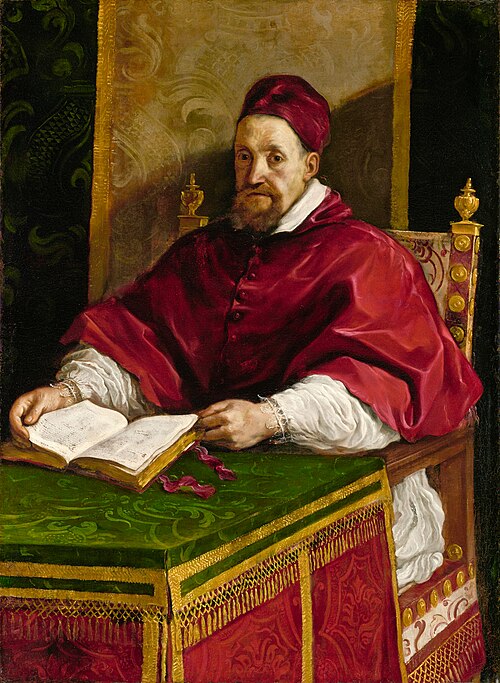
Famously intericted the Republic of Venice in a jurisdictional dispute. Oversaw the Galileo affair's preliminary stages (Galileo was first investigated in 1615 under Paul V). Completed the facade of St. Peter's Basilica. Added the phrase 'et Filii' to the Litany of Loreto. His pontificate saw the beginning of the Thirty Years' War (1618) — the catastrophic religious conflict that devastated central Europe.
1621–1623 — Italian (Bologna)
Founded the Congregation for the Propagation of the Faith (1622) — the central Vatican body coordinating global Catholic missions, still operating as the Dicastery for Evangelisation. Canonised Ignatius of Loyola, Francis Xavier, Teresa of Avila, Philip Neri, and Isidore the Farmer — five at once, a record. Regulated the conclave definitively with Aeterni Patris (1621), requiring a secret written ballot.
1623–1644 — Italian (Florence, Barberini)
A Renaissance man who was a gifted Latin poet. He was a patron of Bernini and Borromini, who transformed Rome's baroque landscape. He oversaw the 1633 trial of Galileo — Galileo's definitive condemnation occurred under Urban, despite their earlier friendship. Urban was notorious for stripping the bronze from the Pantheon's portico for Bernini's baldachin in St. Peter's, prompting the saying: 'What the barbarians didn't do, the Barberini did.'
1644–1655 — Roman (Pamphilj)
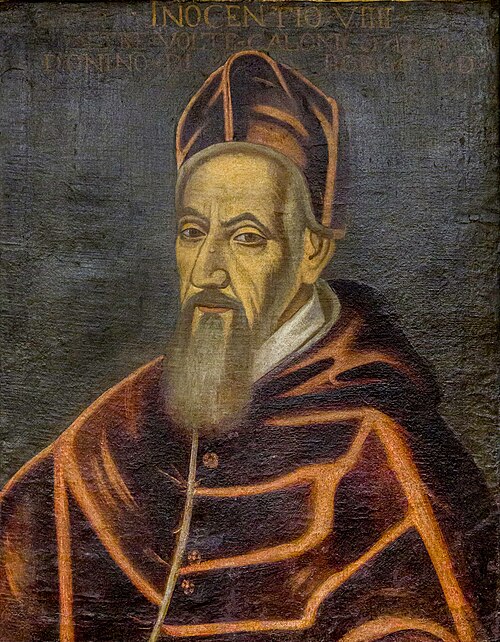
His portrait by Velázquez (c.1650) is considered one of the greatest portraits in Western art history — Innocent himself reportedly exclaimed 'Troppo vero!' ('Too true!') at its brutal realism. Condemned the Peace of Westphalia (1648), which ended the Thirty Years' War but disadvantaged Catholics in Germany. Dominated by his formidable sister-in-law Olimpia Maidalchini, who essentially controlled the papal court.
1655–1667 — Italian (Siena, Chigi)
A cultured poet and friend of Bernini, who designed the magnificent colonnade of St. Peter's Square (1656–1667) for him — the great symbolic embrace of the Church to the world. Condemned Jansenism and issued strict regulations against it. Died with a skull on his bedside table as a memento mori.
1667–1669 — Italian (Tuscany)
A brief but beloved pontificate. A gifted writer of sacred opera librettos. Known for personal compassion to the poor. Died of grief, it was said, when Crete fell to the Ottoman Turks in 1669 despite the heroic defence of Candia.
1670–1676 — Roman (Altieri)
Elected at age 79 — one of the oldest popes in history. His pontificate was effectively governed by his cardinal nephew. Canonised Rose of Lima, the first saint of the Americas. Declared the Holy Year of 1675.
1676–1689 — Italian (Como)
An austere reformer who cut the extravagance of the papal court, fought nepotism, and supported the relief of Vienna from Ottoman siege (1683) — the Battle of Vienna saved Christian Europe. He financed Jan Sobieski's campaign and is considered a hero of the defence of the West. Beatified by Pius XII in 1956.
1689–1691 — Venetian (Ottoboni)
Elderly at election. Condemned Gallicanism and Quietism. Despite good intentions, reverted to nepotism after his predecessor's strict reforms. Brief pontificate of approximately 2 years.
1691 – Present
Enlightenment, Revolution, Vatican Councils I and II, and the global Church of the 20th–21st centuries — through Pope Leo XIV, the first American pope.
1691–1700 — Italian (Naples)
Ended papal nepotism with the landmark bull Romanum decet Pontificem (1692) — prohibiting popes from granting estates or offices to relatives. Reconciled Louis XIV and the papacy after the Gallican crisis. A genuine reformer who gave away his personal wealth to the poor.
1700–1721 — Italian (Marche)
His reign saw the War of Spanish Succession, which severely damaged papal political influence. Condemned Chinese Rites in 1715 — allowing Chinese converts to continue ancestral veneration practices — a decision that crippled Catholic missions in China for two centuries. Issued Unigenitus (1713), condemning 101 Jansenist propositions — triggering French church conflict for decades.
1721–1724 — Roman (Conti)
Brief pontificate of approximately 2 years. Continued the controversy over Chinese Rites. Approved the Passionist Order. Illness dominated his final months.
1724–1730 — Italian (Benevento, Orsini)
A Dominican friar and ascetic who continued to hear confessions personally as pope. Restored relations with the Bourbon courts. Dominated by his corrupt secretary Coscia, who sold ecclesiastical appointments systematically.
1730–1740 — Italian (Florence, Corsini)
Blind from 1732, governing his last eight years entirely without sight. Condemned Freemasonry with In Eminenti (1738) — the first papal condemnation of Masonic lodges. Restored the Trevi Fountain competition, which eventually produced the iconic Baroque fountain completed by his successor.
1740–1758 — Italian (Bologna)
Widely considered the most intellectually distinguished pope of the 18th century — an encyclopaedic canon lawyer and theological scholar. He corresponded with Voltaire and Frederick the Great. Reduced excessive feast days. Attempted cautious resolution of the Chinese Rites controversy. His encyclopaedic De Servorum Dei Beatificatione et Beatorum Canonizatione remains the foundation of canonisation procedure.
1758–1769 — Venetian
His entire pontificate was consumed by the campaign to suppress the Society of Jesus (Jesuits). Bourbon monarchies expelled the Jesuits from their territories one by one; Clement steadfastly refused to dissolve the order, issuing the ringing defence Apostolicum Pascendi (1765). He died — reportedly of shock — the night before he was to announce a final definitive decision on the Jesuits.
1769–1774 — Italian (Romagna)
Under irresistible pressure from the Bourbon monarchies of France, Spain, Portugal, and Naples, he suppressed the Society of Jesus with the brief Dominus ac Redemptor (1773). The Jesuits — 23,000 missionaries, scholars, and educators — were dissolved worldwide. Only Protestant Prussia and Orthodox Russia refused to implement the suppression, protecting the Jesuits until they were restored in 1814. Clement IV died the following year, widely believed to have been poisoned, repeating 'Compulsus feci' — 'I was compelled to do it.'
1775–1799 — Italian (Cesena)
A 24-year pontificate overshadowed by the French Revolution. Napoleon's forces invaded the Papal States, took the pope prisoner, and transported the 81-year-old Pius VI to France, where he died in captivity in Valence in 1799. Voltaire had predicted the Church would be finished within 20 years; it survived Voltaire by centuries. Pius VI condemned the Civil Constitution of the Clergy that subordinated the French church to the revolutionary state.
1800–1823 — Italian (Cesena)
One of the most remarkable popes of the modern era. Negotiated the Concordat of 1801 with Napoleon, restoring Catholicism to France. Crowned Napoleon Emperor in 1804 — Napoleon grabbed the crown from the pope's hands and crowned himself. Napoleon later imprisoned Pius VII for 5 years (1809–1814). When Napoleon fell, Pius VII was restored, and he — remarkably — pleaded for mercy for Napoleon's defeated family. Restored the Jesuits in 1814. A man of immense dignity and courage.
1823–1829 — Italian (Marche)
A severe traditionalist who reversed many of Pius VII's moderate concessions. Condemned religious indifferentism, tightened restrictions on Jews in the Papal States (re-establishing the Roman Ghetto), and fought Freemasonry and secret societies. Deeply unpopular in Rome for his austerity.
1829–1830 — Italian (Marche)
Brief pontificate of approximately 20 months. Condemned mixed marriages without Catholic pledges and secret societies. The beginning of the revolutionary upheavals that would consume Europe occurred just as he died.
1831–1846 — Italian (Veneto)
A deeply conservative monk who had never left a monastery before becoming a cardinal. Condemned Félicité de Lamennais's liberal Catholicism. Opposed Italian nationalism. Issued In Supremo Apostolatus (1837) — condemning the slave trade, though the condemnation was ambiguously applied. Introduced gas lighting to the Papal States but refused railroads — he called them 'roads to hell' (chemins de fer / chemins d'enfer). The Papal States were administered notoriously badly.
1846–1878 — Italian (Marche)
The longest-serving pope in history (31 years 7 months) and one of its most controversial. Defined the dogma of the Immaculate Conception (1854) and Papal Infallibility at Vatican I (1870). Published the Syllabus of Errors condemning modern liberalism. Lost the Papal States to the Italian state (1870) and became 'the prisoner of the Vatican.' He began as a liberal reformer and ended as a bitter reactionary. Beatified by John Paul II in 2000.
1878–1903 — Italian (Lazio)
A towering intellectual figure who engaged modernity with unprecedented sophistication. Rerum Novarum (1891) — the first great social encyclical — addressed the industrial revolution's injustices, defending workers' rights and laying the foundation of Catholic Social Teaching. Opened the Vatican Archives to scholars. Encouraged biblical studies. Promoted Thomistic philosophy as the foundation of Catholic intellectual life. Established Catholic universities worldwide. Died aged 93 — the oldest pope in history until that point.
1903–1914 — Italian (Veneto)
A poor peasant's son who became pope. Lowered the First Communion age to 7, reformed the breviary and liturgical calendar, encouraged daily Communion (then rare), composed the definitive Code of Canon Law (completed posthumously 1917). Vigorously condemned Modernism with Pascendi Dominici Gregis (1907). Died at the outbreak of World War I, reportedly of grief. Said: 'I was born poor, I lived poor, and I will die poor.' Canonised 1954.
1914–1922 — Italian (Genoa)
Pope of World War I — which he called 'the suicide of civilised Europe.' His seven-point peace proposal of 1917 was rejected by all belligerents. Organised extraordinary charitable relief efforts for war prisoners and refugees. Canonised Joan of Arc (1920). Issued Maximum Illud (1919), reforming Catholic missionary practice and insisting on indigenous clergy. Deeply underappreciated historically.
1922–1939 — Italian (Lombardy)
Signed the Lateran Treaty (1929) with Mussolini, creating Vatican City as a sovereign state — resolving the 59-year 'Roman Question' since the loss of the Papal States. Condemned Nazism in Mit Brennender Sorge (1937) — smuggled into Germany and read from every pulpit on Palm Sunday. Condemned Soviet Communism in Divini Redemptoris (1937). Called Christ 'the King' and instituted the Feast of Christ the King (1925). Coined the principle of subsidiarity in Quadragesimo Anno (1931).
1939–1958 — Roman
One of the most controversial popes of the 20th century. His conduct during the Holocaust — whether he did enough to oppose Nazi genocide — remains vigorously debated by historians. The Church claims he worked through diplomatic channels and sheltered thousands of Jews in Vatican properties. Critics argue his public silence emboldened perpetrators. He defined the dogma of the Assumption of Mary (1950). Reformed Holy Week liturgies. Opened the Church to modern biblical scholarship (Divino Afflante Spiritu, 1943). Beatified by Benedict XVI in 2009.
1958–1963 — Italian (Bergamo)
Angelo Roncalli — elected at 76 as a transitional pope, he surprised the world by convening the Second Vatican Council (1962–1965), the most important council in centuries. His encyclical Pacem in Terris (1963) — addressed to 'all people of good will' — was a landmark of Catholic social thought. His warmth, humility, and pastoral joy made him one of the most beloved figures of the 20th century. He died of stomach cancer before the Council concluded. Canonised by Francis in 2014.
1963–1978 — Italian (Brescia)
Guided the Second Vatican Council to completion and implemented its reforms, including the New Mass in the vernacular. First pope to visit all six inhabited continents. His encyclical Humanae Vitae (1968) — reaffirming the Church's prohibition of artificial contraception — proved the most controversial papal document of the century. Also issued Evangelii Nuntiandi (1975) — considered by many the greatest evangelisation document of the modern era. Lived to see his close friend Aldo Moro murdered by the Red Brigades. Canonised 2018.
Aug 26–Sep 28, 1978 — Italian (Veneto)
Albino Luciani — 'the smiling pope.' Elected in August, dead 33 days later — found alone in his bedroom by his secretary. No autopsy was performed, sparking decades of conspiracy theories. He was the first pope to use the double name, combining his two predecessors, John and Paul. His warmth, simplicity, and evident holiness made his death a global tragedy. Beatified by Francis in 2022.
1978–2005 — Polish (Wadowice)
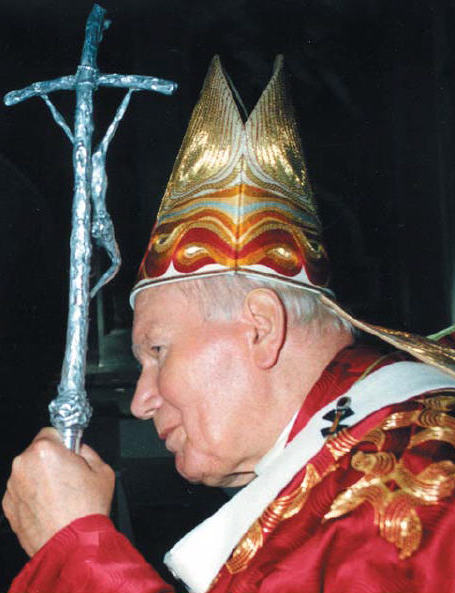
Karol Józef Wojtyla — one of the most consequential humans of the 20th century. The first non-Italian pope since 1523. His 1979 visit to Poland catalysed the Solidarity movement that began the peaceful collapse of Soviet Communism. Survived an assassination attempt in St. Peter's Square (1981) and personally forgave his would-be assassin. Visited 129 countries — more than any other person in history. Issued the Catechism of the Catholic Church (1992). Died after years of visible Parkinson's suffering — his death watched live by an estimated two billion people. Canonised 2014.
2005–2013 — German (Bavaria)
Joseph Aloisius Ratzinger — a brilliant theologian who had been John Paul II's closest doctrinal collaborator for 23 years. His pontificate was overshadowed by the clergy abuse scandal, which he confronted more directly than any previous pope. Lifted the excommunication of SSPX bishops. Issued the apostolic constitution Anglicanorum Coetibus creating personal ordinariates for Anglican converts. On February 11, 2013, he announced his resignation — the first pope to resign since Gregory XII in 1415, citing his failing strength. His decision to resign fundamentally changed the modern papacy. He died on December 31, 2022, aged 95.
2013–2025 — Argentine (Buenos Aires)
Jorge Mario Bergoglio — the first Jesuit pope, the first from the Americas, the first from the Southern Hemisphere, and the first to take the name Francis, in honour of St. Francis of Assisi. He lived in Casa Santa Marta rather than the Apostolic Palace. Issued Laudato Si (2015) on ecology and Amoris Laetitia (2016) on family life. Called for a 'poor Church for the poor.' His pontificate was marked by synodality, mercy, and the ongoing response to the clergy abuse crisis. He died on April 21, 2025, at the age of 88.
2025–present — American (Chicago, Illinois)
Robert Francis Prevost — the first American pope in the history of the Church. Born in Chicago, Illinois, he is a member of the Order of Saint Augustine (OSA) and served as a missionary in Peru for over two decades before becoming Bishop of Chiclayo. Pope Francis appointed him Prefect of the Dicastery for Bishops in 2023 — one of the most influential positions in the Vatican. He was elected on May 8, 2025, taking the name Leo XIV in honour of Pope Leo XIII, whose great social encyclical Rerum Novarum (1891) laid the foundation of Catholic Social Teaching. He is the 267th Bishop of Rome.